Why Puzzles Before Bed Beat Scrolling for Better Sleep

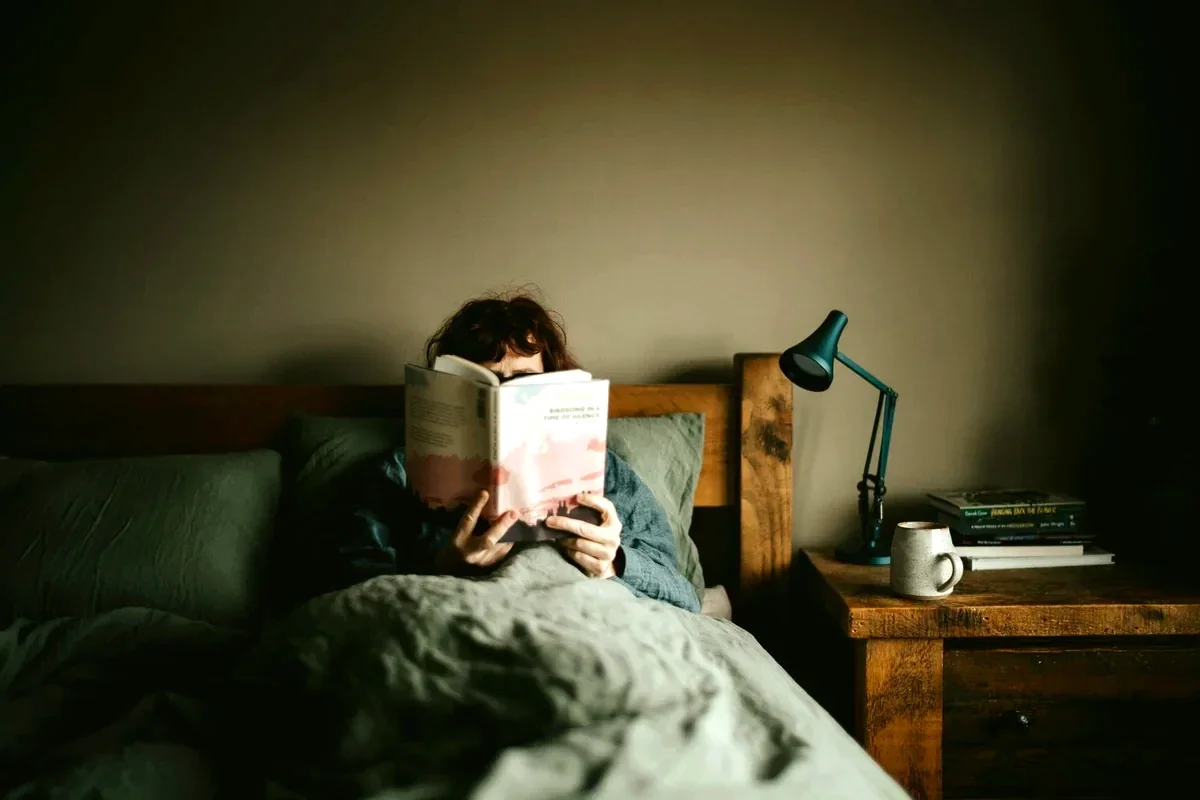
Reading before bed is one of the simplest ways to wind down without a screen.
It starts with good intentions. You climb into bed, pull the covers up, and tell yourself you'll just check a few things before you sleep. Ten minutes later, you're deep in a feed you didn't mean to open, scrolling through content that ranges from mildly entertaining to quietly upsetting, and the ceiling light you meant to switch off is still blazing. Half an hour has vanished. Your mind, rather than slowing down, is running faster.
This is the bedtime scrolling trap, and most people fall into it every single night. The habit feels harmless because it feels passive. You're just looking. But the brain during a scroll session is anything but at rest. It's processing, reacting, and responding to a stream of stimulation designed to hold your attention, and that design works right up until the moment you need your attention to completely let go.
The solution doesn't require an app, a supplement, or a complicated new routine. It requires something far simpler: a puzzle book, a pencil, and about fifteen minutes of your evening. This article explores what scrolling is actually doing to your brain at night, why puzzles offer something meaningfully different, and how making that small swap could change the quality of your sleep and how you feel every morning.

Scrolling in a dark room exposes your brain to blue light precisely when it needs to switch off.
What Scrolling Really Does to Your Brain at Night
The science here is consistent. Screens emit blue-wavelength light, and that light has a direct effect on the brain's ability to prepare for sleep. Blue light has been shown to suppress melatonin production for roughly twice as long as other light wavelengths, pushing back your biological readiness for sleep even when your body feels physically tired. Melatonin is the hormone that signals to the brain that night has arrived, and when screens delay its release, the window for natural sleep quietly narrows.
The effects extend well beyond light alone. People who used light-emitting screens before bed took longer to fall asleep, had lower melatonin levels, and felt less alert the following morning than those who read from a printed book under the same conditions. The device was introducing something into the pre-sleep period that the physical page simply did not.
Even unrestricted evening tablet use, the kind of casual scrolling most people do, has been shown to result in self-selected bedtimes delayed by around thirty minutes and melatonin onset pushed back by nearly an hour. Every new post, every notification, and every emotionally charged headline keeps the nervous system in a state of readiness long after you've intended to wind down. The result is what sleep researchers describe as a biological contradiction: you are physically exhausted, but your brain has been convinced there is still something to respond to.
Why Puzzles Work Differently
A puzzle does something a phone cannot. It closes the world down to a small, manageable problem.
When you sit with a Sudoku grid or a crossword, your attention narrows to the task in front of you. There are no new inputs arriving, no notifications, and no decisions to make about whether to engage or scroll past. The puzzle defines its own boundary, and inside that boundary the mind finds something it rarely gets at night: a structure it can actually finish exploring. This kind of bounded, sustained attention is precisely what builds the brain's capacity to focus and block out noise, which is the opposite of what scrolling trains the mind to do.
The contrast matters for sleep in a direct, physiological way. Evening screen use has been consistently linked to reduced total sleep time and a longer time to fall asleep, effects that accumulate across nights without most people identifying the source. A printed puzzle book under a warm lamp introduces none of that disruption. There is no algorithm working to extend your session, no blue-wavelength emission to delay melatonin, and no infinite feed pulling you past the moment you intended to stop.
Puzzles engage the brain in focused, low-stakes cognitive effort. Pattern recognition, working memory, and quiet logic are all gently active, but without the cortisol-spiking stimulation of emotionally loaded content. The result is a brain that is occupied but not alarmed, which is exactly the condition that allows sleep to arrive.
Puzzle solving offers the brain calm, bounded focus — the opposite of what scrolling demands.
The Quiet Satisfaction of Winding Down
Scrolling tends to leave people feeling more stimulated and often less satisfied than when they started. The feed is unpredictable by design, pulling you forward with the possibility of something more interesting just out of reach. That mechanism holds attention effectively, but it is not effective at producing the sense of completion the brain needs before sleep.
Puzzles work in the opposite direction. Each small insight, each number placed correctly, each word confirmed with a quiet click of recognition, produces a gentle sense of reward. Puzzle solving activates dopamine pathways tied to achieving small, self-contained goals. These feel like resolution rather than stimulation. When you close a puzzle book mid-solve, you are putting something down. When you put your phone down after scrolling, you are rarely putting anything down because the feed has no natural ending.
The stress reduction effect is equally significant. Puzzle-style games have been shown to measurably reduce salivary cortisol and alpha-amylase, two markers of the body's stress response. Cortisol tends to remain elevated when the mind is processing emotionally loaded content, and elevated cortisol in the evening works directly against the hormonal conditions required for deep, restorative sleep. Bringing those levels down in the hour before bed is a meaningful physiological shift, and it is one that a puzzle book can genuinely support.
If you experience a racing mind or anxiety before sleep, this connection is worth exploring further. The calming properties of puzzle solving and how they differ from passive distraction are explored in more detail in this guide on how puzzles ease anxiety and reduce mental stress.
Building the Habit: A Simple Bedtime Ritual
The most effective bedtime routines are consistent and intentional rather than complicated. A practical starting point is removing your phone from your bedside at least thirty minutes before you plan to sleep. Keeping devices out of the bedroom as part of a consistent sleep routine is a recommendation backed by sleep health guidance, and that buffer is the minimum the melatonin system needs to begin recovering from screen exposure before rest.
Keep a puzzle book and pencil on your bedside table. Physical proximity matters more than it might seem. The easier the habit is to begin, the more likely you are to return to it each night without needing to make a fresh decision. Choose a format that genuinely appeals to you, whether that is Sudoku, a crossword, a word search, or a logic grid. The goal is quiet engagement, not challenge for its own sake.
Set a soft limit of fifteen to twenty minutes and stop when you feel pleasantly drowsy. The session only works if it leads somewhere quiet, so resist checking your phone once it ends. For a simple structure that works well in the evening, the guide on building a consistent ten-minute puzzle habit is a useful starting point. Consistency matters more than duration. A short, regular session each evening, repeated over weeks, builds a conditioned association between puzzles and the shift toward sleep. The habit eventually becomes its own signal.

A book, a cup of tea, and no screen — a simple evening ritual that supports better sleep.
The Case for Choosing Something With Edges
What scrolling offers is infinite: an endless feed, constantly replenishing itself, designed to have no natural stopping point. That infinity is a problem at night. The human mind does not wind down well in the presence of endless possibility. It needs a sense of edges.
Puzzles have edges. They have grids and clues and a finite number of squares to fill. They ask something specific of you, and when you put them down, you have gone somewhere and can return. There is a before and an after. That simple quality, the fact that a puzzle is a bounded thing with a beginning and a structure, may be the most underrated reason it works so well before sleep.
Swapping even part of your evening screen time for a puzzle book is one of the smallest, most accessible changes you can make to your nighttime routine. It costs almost nothing, requires no technology, and asks only that you give your mind something gentle to hold for a few minutes before you let go entirely. If you're unsure where to start, this overview of screen-free puzzle formats that work well for adults covers the main options and what each one is good for.
FAQ
-
Calmer, more rhythmic puzzles tend to work best in the evening. Word searches, gentle crosswords, and easy Sudoku grids are ideal because they require steady focus without sharp decision-making or time pressure. The goal is low-stimulation engagement rather than a challenge that raises your alertness. More demanding puzzles are better saved for earlier in the day.
-
Aim to begin at least thirty minutes before you plan to sleep, and put your phone away at the same time. This gives melatonin production a chance to recover and the nervous system time to shift toward rest. Fifteen to twenty minutes of puzzling is enough for most people to feel the benefit without overstimulating the mind.
-
Try a lower difficulty level or switch to a more repetitive format like a word search, which tends to be more meditative than logic-heavy puzzles. If a puzzle makes you feel alert or frustrated, simply put it down. The point is to feel gently occupied, not challenged. The visual and pattern-matching nature of a word search tends to offer the calmest form of pre-sleep focus for most people.
-
Yes, and significantly so. A physical book eliminates blue light exposure entirely and removes the risk of notifications drawing you back into the feed. The printed page under a warm lamp supports melatonin production rather than disrupting it. Apps may offer some cognitive benefits, but the screen itself works directly against the sleep preparation you are trying to support.
-
The research on blue light and melatonin is consistent and well established, so removing screen exposure in the evening has a real and measurable physiological effect. Beyond the light itself, shifting from reactive, emotionally stimulating content to calm, bounded engagement also reduces cortisol, which is directly tied to sleep quality. Most people who make the switch consistently report falling asleep more easily and feeling more rested in the morning.